


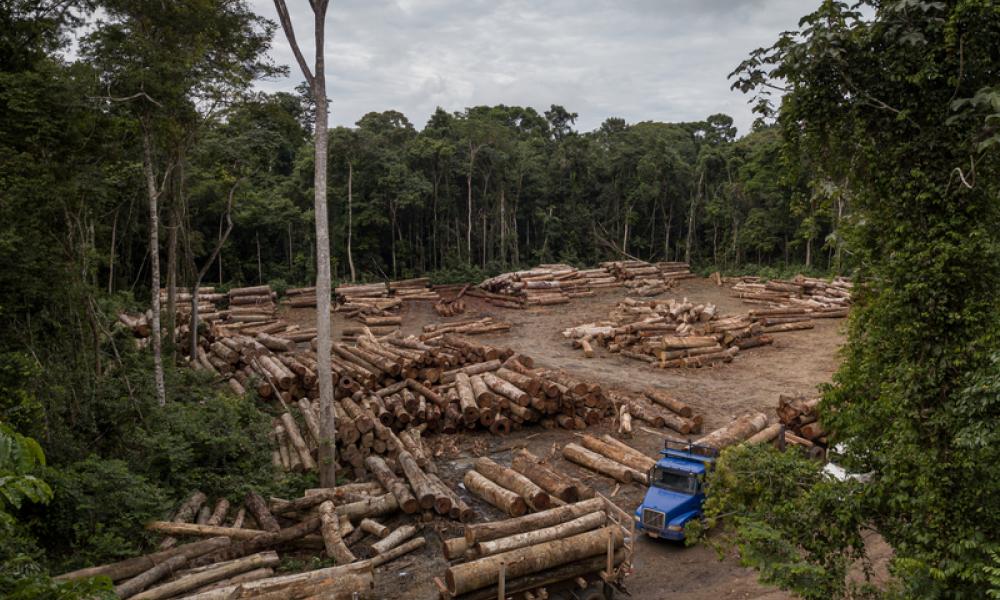
A new peer-reviewed study in published in Science on July 24 explores how investments to prevent tropical deforestation and wildlife trade could significantly reduce overall costs associated with widespread zoonotic diseases that have rampaged through human populations in recent years. SARS, MERS, H1N1, HIV, and now the virus behind COVID-19 are all linked to human contact with wildlife. The economic and mortality toll of COVID-19 alone may cost as much as $16 trillion. The research team estimates the virus prevention costs for 10 years to be valued at only about 2% of the costs of the COVID-19 pandemic.
The research team includes CEOS Co-Director Amy Ando from the University of Illinois at Urbana-Champaign, medical and environmental scientists, other economists, and conservation practitioners from 14 institutions and nonprofits. They explain that zoonotic viruses most often pass from wildlife to human populations in one of two ways: directly through handling wildlife or indirectly through caring for and consuming affected domestic livestock. Transference most often occurs in areas where tropical deforestation has pushed disease-carrying animals like primates, rodents and bats to exist near humans, as well as through the global wildlife trade.
As the COVID-19 pandemic continues to wreak havoc globally, the costs