Republished from the University of Illinois press release, August 10, 2020
URBANA, Ill. – Bird biodiversity is rapidly declining in the U.S. The overall bird population decreased by 29% since 1970, while grassland birds declined by an alarming 53%.
Valuable for so much more than flight and song, birds hold a key place in ecosystems worldwide. When bird numbers and varieties dwindle, pest populations increase and much-needed pollination decreases. Those examples alone negatively impact food production and human health.
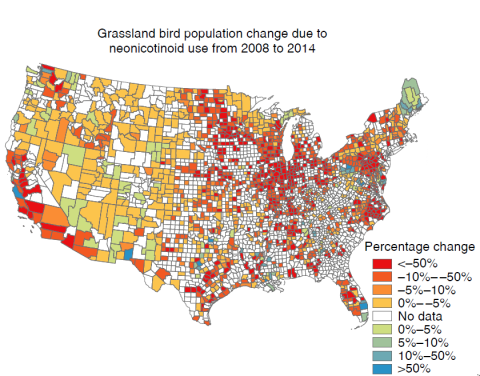
Likely reasons for the far-reaching and devastating declines include intensified agricultural production, use of pesticides, conversion of grassland to agricultural land, and climate change. A new study from University of Illinois points to increased use of neonicotinoid insecticides as a major factor in the decline, says Madhu Khanna, distinguished professor in agricultural and consumer economics at U of I and co-author on the paper, published in Nature Sustainability.
Listen to the interview with authors Madhu Khanna and Ruiqing Miao on the CEOS podcast.
Numerous studies have shown neonicotinoids– nicotine-based pesticides– negatively affecting wild bees, honey bees, and butterflies, but large scale studies of the pesticide’s impact on birds have been limited, Khanna notes.
“This represents the first study at