June 27, 2026
4:32 AM
Bryan Parthum

The Paul A. Funk Awards are usually celebrated at a banquet every April. The pandemic shut down the banquet this year, so we want to recognize CEOS collaborators who would have been honored.

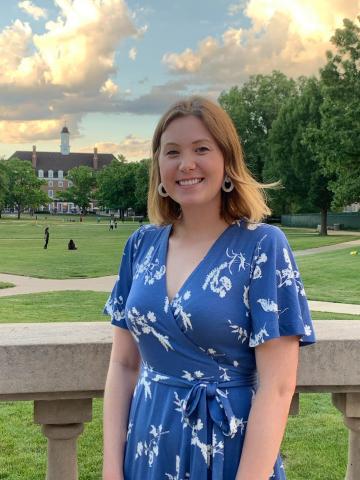
Bryan Parthum received the Louis V. Logeman Graduate Student Teaching Award, which honors graduate students that excel as teachers in the classroom. Over a period of four semesters, Bryan has proven himself an exceptionally talented and versatile instructor both in the traditional classroom and online. Whether building a new course for the department, interacting with undergraduate students inside and outside the classroom, or innovating an online course that resonates with freshmen and sophomores, the proof of Bryan’s commitment and effectiveness can be summed up in his evaluations from both students and faculty.

Students have evaluated Bryan as a teacher each semester, giving him high marks and positive comments.  Common themes related to Bryan’s approachability and helpfulness, the usefulness of the topics taught, and how well Bryan explained the material. In fact, the evaluations we so good that Bryan’s name appearing on the University-wide Teachers Ranked as Excellent list for every semester he taught, whether in an online or in-person setting. That is a rare achievement for any instructor
June 27, 2026
4:32 AM
Drip irrigation

Population pressure is high and soils are degraded in many areas of Malawi. Along with co-authors Annemie Maertens and Vesall Nourani, CEOS's Hope Michelson evaluated an agricultural extension program working to promote technologies of integrated soil fertility management to build and preserve soil health in Malawi. The authors conclude that farmers that engage in hands-on, local farming experiences, including season-long, farmer-led demonstration crop cultivation, plan to adopt more components of new technologies. Specifically, they found:

  • Farmers learn more about new technologies from demo plots than field days, though field days might influence beliefs around profitability.
  • Farmers learn more about technologies that demonstrate observable impacts on demo plots they co-manage with extension workers relative to technologies that do not demonstrate impacts.
  • This effect is more heavily concentrated among 1) farmers whose plot conditions resemble the conditions of the demo plot and 2) input technologies are affordable.
  • These observations are reflected in a two-stage model of learning in which farmers first assess profitability before choosing to pay attention to technologies when they are believed to be 1) profitable and 2) affordable.

Read the full article.  

Maertens, A., Michelson, H. & Nourani, V. (2020). How do farmers learn from extension services? Evidence from Malawi. American Journal of Agricultural Economics. 10.1111/ajae.12135

June 27, 2026
4:32 AM
Meghan Selip

This summer did not slow down for Meghan Selip, a recent ACE graduate whose interest in sustainability economics led to an internship with CEOS. Meghan got to work with the Ecology Action Center in Normal, Illinois this summer where she studied ways to reduce greenhouse gas emissions in McLean County. Primarily, she focused on the costs and benefits of utilizing hybrid vehicles and tree planting to improve air quality and how to best implement these strategies. The results will be put into a project proposal and presented to local officials to help advise them on what would be the best option for the Bloomington-Normal community.  

Meghan is currently pursuing her Masters in Agricultural and Applied Economics in the ACE Department and is a member of the Student Sustainability Committee at Illinois. She aspires to discover innovative solutions that are economically viable in environmental and food sustainability.

June 27, 2026
4:32 AM
red oak rain garden

Eric Zhang’s enthusiasm for research has only grown since he began his first research project his sophomore year, which eventually led him to work with CEOS’s Amy Ando. In 2019, Eric Zhang, a senior in ACE, was awarded the first CEOS undergraduate research mini-grant to study the value people have for native plant species in the University of Illinois community. The project gracefully blended Eric’s background in applied economics with his minor in horticulture. Eric used the grant money to design and conduct a survey that enabled him to collect data from respondents in the UIUC community. The analysis can help determine if the cost of converting landscapes to include native plants exceeds people’s willingness to pay (WTP) for them.

The results of the study were straightforward. The average WTP for replacing non-native flower plantings with native species on central campus was more than $20 per person. Eric reports, “People have higher WTP when they know more about native plants. However, we do not know the cost of having and keeping native plants on this campus, so we cannot determine if expanding native plants has net positive value.”

Eric hopes the results will support native landscaping projects at the University