


Qianqian’s research interests are in precision agriculture, with the aim of using different sources of data and combining them with other information to improve resource use efficiency, productivity, quality, profitability, and the sustainability of agricultural production. She earned her M.S. degree in Agricultural Economics from the University of Nebraska-Lincoln. Originally from the north part of China, she enjoys traveling and staying with family or friends in her free time.
Mrignyani received her PhD from the Department of Agriculture and Consumer Economics at the University of Illinois Urbana Champaign. Her dissertation focused on food policy in developing countries. Her research interest lies in investigating consumer behavior and implementing interventions within food environments to promote improved nutrition.
Gustavo is a Ph.D. student at the University of Illinois Urbana-Champaign, specializing in transportation dynamics within the Big Data in Environmental Economics and Policy Research Group. He investigates the effects of disruptions in national ground transportation resulting from natural disasters and examines how these factors shape the dynamics of product price transmission. Gustavo also explores how ground transportation markets and companies respond to rising costs from these events.
Dr. Low’s research and Extension emphasize how to support and facilitate regional economic development and prioritize policy-relevant issues, drawing on her experience in the federal government. Her research interests include business dynamics, broadband impacts, rural household well-being, value-added agriculture, and entrepreneurial ecosystem building.
Andrew is an environmental and IO economist studying the economics of environmental regulation. His research interests include firm behavior under regulatory uncertainty and quantifying the economic impacts of climate change. His doctoral studies were at UC Berkeley ARE, where he was a fellow in the Global Policy Lab and an NSF Data Sciences for the 21st Century fellow and was a postdoc at EPIC and the Department of Economics at the University of Chicago. He also holds a Master's in Public Policy from UC Berkeley and a BSE in Chemical Engineering from Princeton University.
Marin is an applied economist studying the interaction between policy, agriculture, and the environment. Her research focuses on how market-based and public agricultural policy in the United States and the Brazilian Amazon influence farmer behavior. She uses this lens to study indirect policy effects on the environment, including deforestation, GHG emissions, and water quality. She approaches these questions by combining econometric methods, big data, extensive field work, and collaboration with interdisciplinary partners in the US and Brazil.
September 22, 2026
5:04 AM
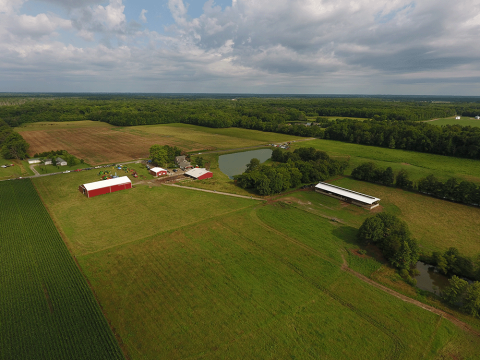
Farms have a promising opportunity to fight climate change using a simple but plentiful asset: soil. Soil has the capacity to store carbon in amounts that can meaningfully offset greenhouse gas emissions through retaining carbon (otherwise called carbon sequestration).
The private sector has established corporate goals for reducing contributions to climate change by offsetting emissions, with one method being carbon sequestration on agricultural lands. The incentivized, voluntary markets for agricultural soil carbon sequestration are a potential opportunity for farmers to meet these corporate goals.
A new brief from the Center for the Economics of Sustainability at the University of Illinois explores the market opportunity of incentivizing carbon sequestration in agricultural lands and the current limitations of contract design and land tenure. Authors Amy Ando*, Jonathan Coppess*, Benjamin Gramig**, Menglin Liu*, and Nicholas Paulson* discuss how current challenges can be addressed to unlock these opportunities in “The Achilles Heels of Carbon Farming: Operational Constraints on the Next Cash Crop”. The brief is published on SSRN.
*UIUC, Department of Agricultural and Consumer Economics
**US Department of Agriculture
Ando, A.W., Coppess, J., Gramig, B., Liu, M., & Paulson, N.. (2022). The Achilles Heels of Carbon Farming: Operational Constraints on the Next Cash Crop (July 18, 2022). SSRN: https://ssrn.com/abstract=4166379 or http://dx.doi.org/10.2139/ssrn.4166379
Year Published: 2026
Year Published: 2026
Year Published: 2026