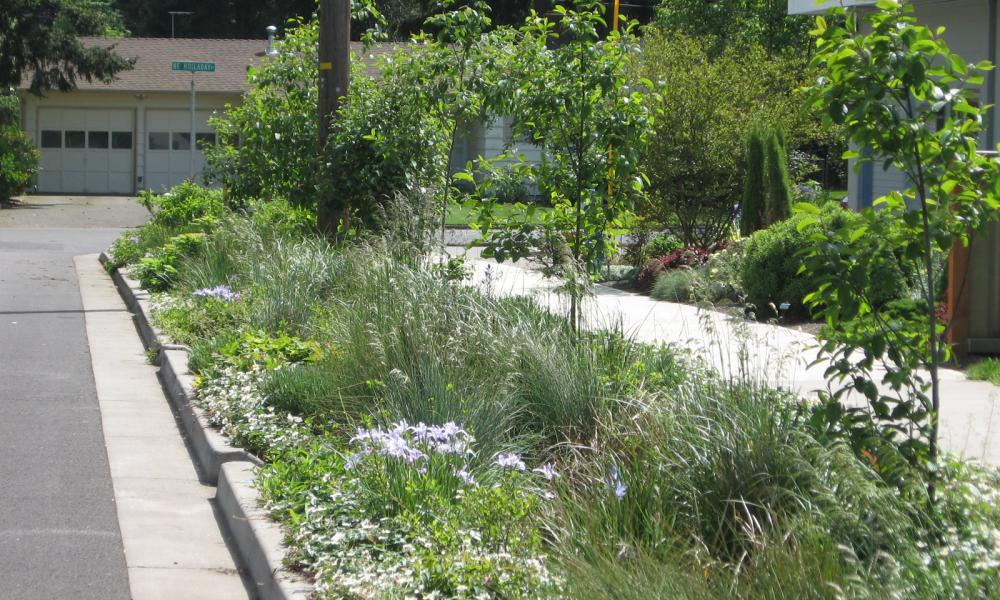
Green streets

Growing urban populations are placing pressure on existing stormwater systems, producing high flood rates, degraded urban aquatic habitat, and low water quality in urban lakes, rivers, and streams. In the case of Chicago, the result imposes losses on residents of as much as $4 billion per year.

Stormwater management is a potentially low-cost solution that can address these challenges. One research group from the Center for the Economics of Sustainability at Illinois and Reed College in Portland, Oregon is tackling the issue using economics. The research team – including CEOS researchers Amy Ando and Bryan Parthum and partners Noelwah Netusil and Catalina Londoño Cadavid– estimated the monetary benefits of stormwater management improvements for Chicago and Portland and how much people are willing to volunteer to improve outcomes. These estimates can inform federal policies and public programs that shape how and where resources are allocated.

Stormwater management is a decentralized approach that requires multiple actors to work together to be effective: property owners must maintain their own projects, such as rain barrels and rain gardens, while cities (with the support of their residents) must maintain public infrastructure, such as green roofs and green streets that allow proper water infiltration.
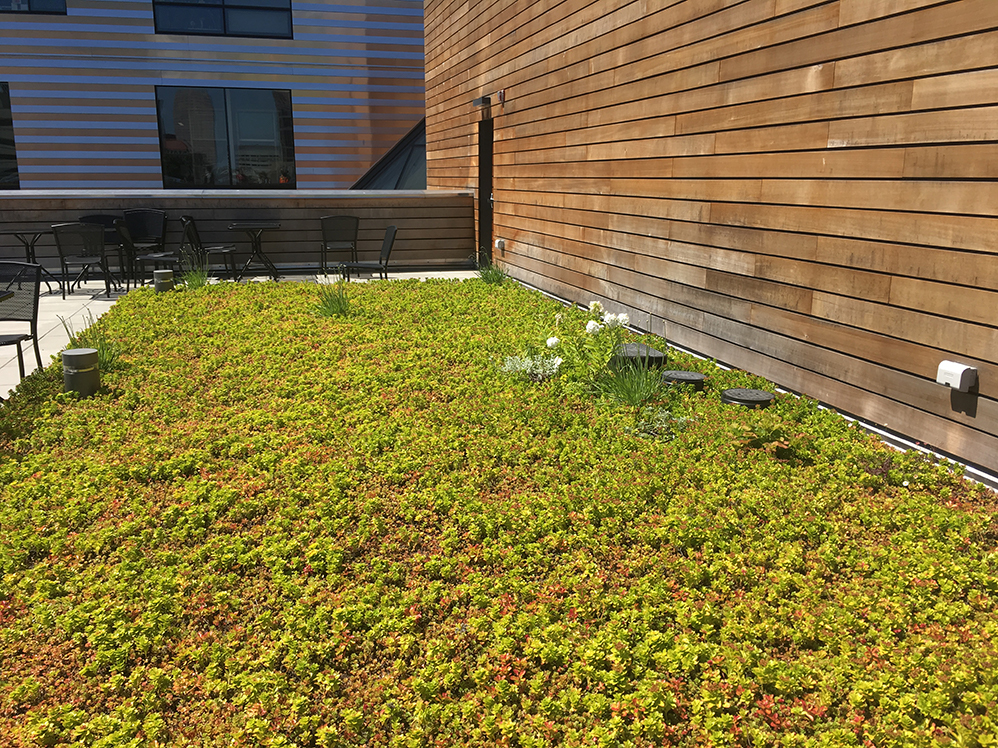
green roofs
Impervious surfaces, like pavement and roofs, prevent water from naturally filtering through the soil into aquifers and rivers, lakes and wetlands. “Green roofs” can help minimize the damage. 


The research

Dr. Xu investigates individual and household decision making to identify genetic and environmental factors influencing financial behavior, and the mechanisms that can be employed to improve to decision maker welfare in the face of financial distress. She also studies the regional and environmental effects of energy development and transportation. 

Watch Yilan's Mini-talk: Fracking: Myths and Truths (2020)

Publications with CEOS themes since 2015

Dr. Sherrick helps improve crop insurance programs in the US and align them with ag-environmental policies. Through Farmer Mac, he works on loan-funding programs that increase farmers’ access to capital. On the Farmland Technical Advisory Board, he coordinates calculations for farmland assessment in Illinois. He uses big data and novel computational strategies to understand farmland values.

Dr. Schnitkey uses Farm Business Farm Management (FBFM) data to analyze profitability of major field crops and to assess impacts of farm programs and risk management strategies. His research informs farmers of the most profitable rotations and encourages long-term change to impact yield. He informs the Illinois Nutrient Loss Strategy, studying cover crop adoption and post-plant nitrogen applications.

Dr. Paulson helps agricultural producers make the best farm- and risk-management decisions possible to optimize profitability and environmental sustainability. He analyzes government policies impacting agriculture, including crop insurance, commodity, and biofuels programs.

Dr. Michelson studies the dynamics of poverty and security in low-income countries. She explores the interaction of international development with local and large-scale agribusiness. She investigates small farmer responses to expanding international supply chains, sustainable supply chains for buying and selling agricultural inputs, and innovation in enhancing soil health. Hope is an Associate Director of CEOS with Shadi S. Atallah.

Dr. Lyons works closely with industry, education, and government to build practical, sustainable, and measurable models that offer innovative solutions for improving the financial stability of families and communities worldwide. She focuses on emerging issues in economic and financial inclusion, poverty and wealth inequality, financial education, and consumer financial protection.

Dr. Lemoine leads the ACES Financial Planning Program. He prepares students to enter a profession that can change the lives and financial outcomes of clients, families, and their businesses. He teaches students to be wealth managers, insurance professionals, and Certified Financial Planning™ professionals. He is interested in the use of sustainability scores to evaluate financial instruments.