June 27, 2026
5:27 AM
love Illinois

Three graduate students won CEOS mini-grants for research over the next year!

These students in Agricultural and Consumer Economics all demonstrate a detailed plan and clear use of funds towards sustainability-related research projects in their applications.

Husain Krawadwala is studying consumer perceptions of health and environmental impacts of plant based meat products under his advisor, Brenna Ellison. Joel Tansey is looking at the sustainability of the Illinois cannabis industry. Juo-Han Tsay will use the funds towards research into the effect of conservation practices on farmland value. Both Ms. Han and Mr. Tansey are working with advisor Nicholas Paulson

Congrats to our winners! 

Learn more about the mini-grants here.

June 27, 2026
5:27 AM
soundcloud

Most of us don't have the resources to read or understand every painstakingly-researched and written article that interests us. That's where the CEOS podcast comes in! 

When scholars publish new research, they tell us the major points and takeaways in about ten minutes.

We are still figuring this out, so bear with us as we continue to learn and produce these.

If you would like to hear an interview on a specific paper or be interviewed about newly published research, please send a request to ceos-contact@illinois.edu.  

1. Madhu Khanna and Ruiqing Miao on the interactions and impacts of birds and pesticides


2. Amy Ando and Bryan Parthum on nutrient runoff in the Mississippi River Basin


3. Shadi Atallah on quantifying spiritual value of the tiger amongst the Soligas Tribe in India

June 27, 2026
5:27 AM
Broccoli

Did you miss out on the December Economics of Sustainability Mini-Talks? All four talks, hosted by Amy Ando, Madhu Kanna, Hope Michelson, and Yilan Xu are now available on the CEOS Youtube channel!

Speakers:

Joe Janzen | "How much U.S. farmland is organic?"

Ben Gramig | “If less tillage costs less, then why don’t more farmers use conservation tillage?”

Brenna Ellison | "Digging in: Food waste along the supply chain"

Shadi Atallah | "Are consumers willing to pay for both local brewing and local hops?"

June 27, 2026
5:27 AM
tillage

In case you missed it, watch Associate Professor Ben Gramig's insightful presentation on the factors that lead to some farmers choosing not to adopt conservation tillage practices. This presentation was recorded during  our December "Mini-Talks" series. If you're interested in learning more, subscribe to our mail list for to be the first to know about upcoming Mini-Talks!

Pic

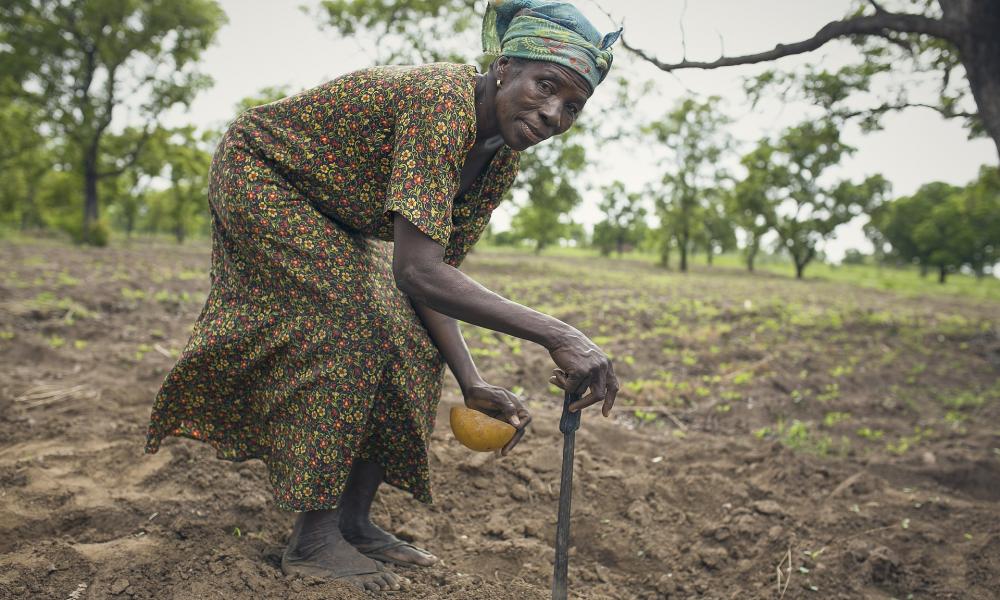
Extension programs are an important component of government agricultural policy and development strategies in nations across the globe. Extension is a principal means for governments to communicate best practices to farmers and is therefore instrumental in supporting rural livelihoods, ensuring an adequate supply of food, and maintaining the economy, especially in low-income nations where economies and labor forces remain predominantly rural and agricultural.

In their recently published paper, “How Do Farmers Learn from Extension Services? Evidence from Malawi,” Associate Professor Hope Michelson of the University of Illinois, Senior Lecturer Annemie Maertens of the University of Sussex, and post-doctoral researcher Vesall Nourani from MIT compare the performance of two primary models of delivering extension services: field days and demonstration plots, and shed light on how farmers learn about new technologies with multiple components. The field day, a one-day event in which farmers are shown new agricultural techniques, but don’t get hands-on experience, and the demonstration plot, a farmer-led season-long program in which participants practice new cultivation methods more thoroughly.

Michelson, Maertens and Nourani conducted the research in Malawi, where extension systems are particularly over-burdened and under-funded. They are focused on new integrated multi-component techniques to help farmers build soil

June 27, 2026
5:27 AM
Power plant near river

Alongside Head-author, Assistant Professor at Northern Ohio University, and UIUC Graduate program alum Laura Logan, a group of experts including CEOS' co-director Amy Ando recently co-authored new research that attempts to quantify tradeoffs between electricity generation and fish populations via population habitat duration curves (PHDCs). The paper analyzes the threat posed by thermal pollution via electricity generation to aquatic ecosystems using data from The Shawnee Fossil Plant on the Ohio River. PHDCs were generated from this data, providing a valuable quantitative model that decision makers can use in economic analyses. The ecosystem gains through fish population growth and electricity generation losses are presented in a scenario in which the river temperature changes by 1.1 degrees Celsius. The PHDCs demonstrate how water temperature can be quantified as a resource, as well as the tradeoffs between operating thermoelectric power plants, and promoting sustainability in aquatic ecosystems.

One of CEOS' biggest goals is to encourage interdisciplinary sustainability research, and this paper is a great example. The different academic lenses applied serve to enhance the scope and relevance of its findings. Logan, Gupta, and Stillwell work within the Civil and Environmental Engineering departments at Northern Ohio University, Cornell University, and the University of Illinois respectively, Suski in the Natural Resources and Environmental Sciences department at Illinois, and Amy