June 27, 2026
3:03 AM
Chicago skyline

Click the links for our most recent research on all areas of the economics of sustainability:

Food & Agriculture

Energy and Environment

  • Repeal of the clean power plan: social cost and distributional implications | news story & full paper

Sustainable Communities

Power plant USA

No one wants to live near a toxic plant. Toxin-releasing facilities such as paper, pulp, and other manufacturing plants negatively affect human health, environmental quality, and property values. And communities with low income, low education, and minority populations are more likely to house such facilities.   

Since mandatory reporting about toxic facilities became publicly available in 1990, affected communities have increasingly expressed concern through the media, and engaged in targeted collective action and “toxic torts” lawsuits for health and environmental damages.

New research from University of Illinois explores the effects of community pressure on the relocation of toxin-releasing facilities.

“Current studies usually focus on the question of where new plants choose to locate. Our research looks at whether facilities make relocation decisions based on the socioeconomic characteristics of the community,” explains Xiao Wang, graduate student alum from the Department of Agricultural Economics at U of I and lead author on the paper. Co-authors include Madhu Khanna, ACES distinguished professor in ACE; George Deltas, Department of Economics at U of I; and Xiang Bi, University of Florida.

Using the Toxics Release Inventory (TRI), an environmental disclosure program that makes information about these facilities publicly available, the study looks at how much

June 27, 2026
3:03 AM
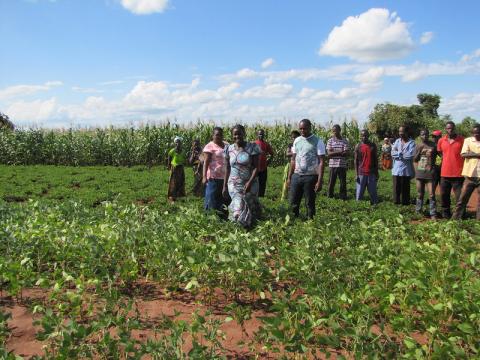
Farmer group

See the latest research giving insight into how and why farmer groups are more cooperative when democratic in nature. Strong social ties also help.

Authors conducted public goods experiments among farmer groups in Malawi for "Public good provision and democracy: Evidence from an experiment with farmer groups in Malawi" to be published in World Development's September 2021 issue. 

They found that democratic groups are more cooperative and engage more in collective action than leader-driven groups. Access the article through your institution here


Vesall Nourani, V., Maertens, A., & Michelson, H. (2021). Public good provision and democracy: Evidence from an experiment with farmer groups in Malawi. World Development(145). https://doi.org/10.1016/j.worlddev.2021.105507.

Photo: AgReach 2015

June 27, 2026
3:03 AM
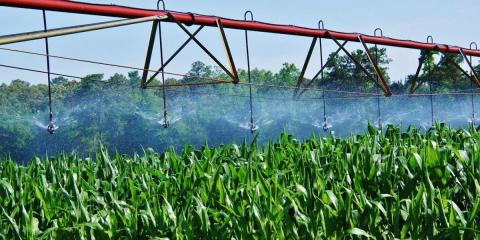
Center pivot irrigation

It is possible to irrigate fields with precision, saving costs and time while lessening runoff and improving crop performance.

University of Illinois led a new study looking at challenge areas of precision irrigation decision-support systems to identify opportunities to improve the tools themselves and adoption among farmers. 

See the full press release here

Access the open-source article here


Zhang, J., Guan, K., Peng, B., Jiang, C., Zhou, W., Yang, Y., Pan, M., Franz, T.E., Heeren, D.M., Rudnick, D.R., Abimbola, O., Kimm, H., Caylor, K., Good, S., Khanna, M., Gates, J., Cai, Y. (2021). "Challenges and opportunities in precision irrigation decision-support systems for center pivots." Environmental Research Letters(16) 5. https://doi.org/10.1088/1748-9326/abe436

Photo: Center-pivot irrigation by University of Illinois 

June 27, 2026
3:03 AM
Power plant near river

Erica Myers co-wrote this piece for Forbes Magazine on why energy efficiency programs sometimes underdeliver and how these programs can change for the better, saving money and effort. 

Erica says there are three main ways to improve energy efficiency programs: 

1. Conduct ongoing testing and analysis of real programs in action through randomized controlled trials.

2. Programs should choose what to install based on real-world energy data and realized program performance.

3. Ensure programs are properly installed by investing in training and pay for workers.

Read the details in the full article: https://www.forbes.com/sites/ucenergy/2021/05/24/energy-efficiency-can-deliver-heres-how/

June 27, 2026
3:03 AM
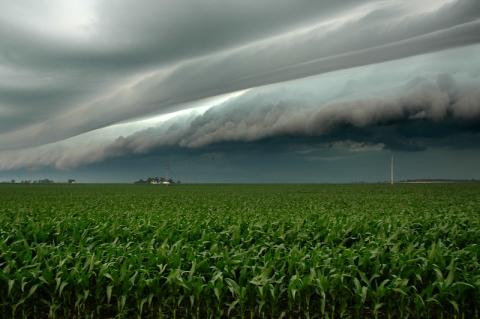
Storms over farms

Illinois is undergoing a rapid change in weather patterns that already has started to transform the state. A major scientific assessment by The Nature Conservancy, in collaboration with experts at the University of Illinois and Northwestern University, foretells long-term, serious effects on cities and rural communities alike from climate change that include periods of extreme heat, increased precipitation and more intense storms, particularly if immediate actions aren’t taken to lessen the threat. 

On May 17, 2021, assessment lead authors summarized the report findings in a public webinar See the Assessment of the Impacts of Climate Change in Illinois (chapter 4) for information on chapter to estimate the effect of projected climate change on corn and soybean yields in Illinois. 

For more information, contact Illinois State Climatologist Trent Ford at twford@illinois.edu. 


1) Liu, Menglin; Gramig, Benjamin (2021): Survey of Cover Crop, Conservation Tillage and Nutrient Management Practice Usage in Illinois and 2020 Fall Covers for Spring Savings Crop Insurance Discount Program Participation. University of Illinois at Urbana-Champaign. https://doi.org/10.13012/B2IDB-5222984_V1

Photo: Storms roll over an Illinois farm. By Rachel Gardner, license

June 27, 2026
3:03 AM
Madhu Khanna

When the Trump administration repealed the Clean Power Plan (introduced during the Obama administration), it "imposed significant economic costs and environmental damages in the form of additional greenhouse gas emissions in the next decade", said Madhu Khanna. Madhu is the lead author on a new study that looks at how the CPP repeal impacted the global and US economies. See what Madhu had to say in a news story from Farmer's Advance/USA Today by clicking here.

Access the full research article.  

Khanna, M., Chen, X., Wang, W. & Oliver, A. (2021). "Repeal of the Clean Power Plan: Social Cost and Distributional Implications." American Journal of Agricultural Economics. https://doi.org/10.1111/ajae.12189